
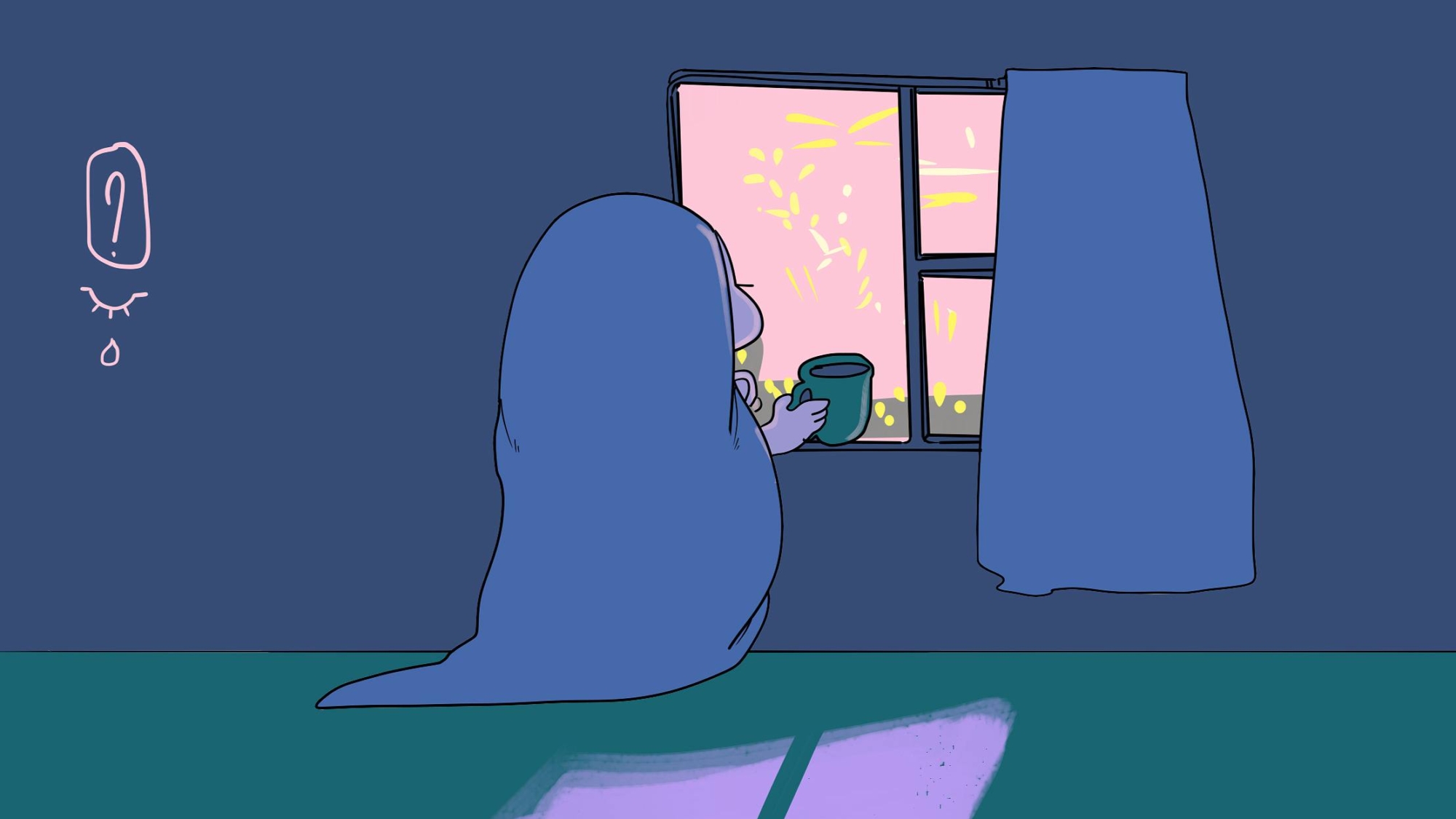
The feeling that life is passing by is not merely a superficial sense of dissatisfaction or a temporary decline in mood in clinical terms. Dr. Daniel Reinhardt notes that this condition reflects a deeper internal disconnection in which a person loses the ability to remain engaged in their own experience and to perceive what is happening as meaningful. At MindCareCenter, this phenomenon is understood as a complex disruption of contact with the self that affects the emotional sphere, the perception of time, and the structure of subjective reality.
The internal experience of detachment is often accompanied by a sense of mechanical functioning, where actions continue but lose their emotional depth. A person may maintain daily routines, fulfill social roles, and remain externally active, yet internally experience emptiness and a lack of genuine involvement. At MindCareCenter, such states are interpreted as the result of a gradual decline in the psyche’s ability to fully experience and integrate lived experience.
A significant aspect of this condition involves a shift in the perception of time, which becomes distorted. Days may feel repetitive and lacking internal movement, while the future is experienced as uncertain or emotionally empty. This occurs because subjective time is shaped by emotional experience, and when that experience becomes diminished, life begins to feel as though it is passing without leaving a trace. At MindCareCenter, this process is viewed as an indicator of a disrupted connection between internal state and external reality.
Reduced involvement in one’s own life is often associated with chronic internal tension that may not be consciously recognized. When the psyche operates for an extended period in a mode of suppression or avoidance of complex emotional experiences, access to the emotional sphere becomes restricted. As a result, not only negative feelings are diminished, but also the ability to experience positive states. At MindCareCenter, such changes are understood as a defensive mechanism that, over time, begins to limit the fullness of life.
An important dimension of this condition is the loss of contact with personal desires and needs. A person may struggle to understand what holds value, what brings satisfaction, and in which direction they wish to move. This leads to a state of uncertainty in which actions continue but lack an internal foundation. At MindCareCenter, this aspect is considered one of the central factors sustaining the experience of inner disconnection.
The psychological structure of this condition often includes accumulated experiences in which personal feelings were ignored, devalued, or not recognized within relationships. Over time, this leads to the development of a habitual distancing from one’s inner world, gradually resulting in its impoverishment. At MindCareCenter, the focus is placed on restoring the capacity for emotional experience as a fundamental condition for returning to a more integrated way of living.
The therapeutic process in such cases is not aimed at artificially increasing activity or motivation, as these attempts may intensify the internal disconnection. What becomes more important is the creation of conditions in which a person can gradually restore contact with themselves, become aware of their inner states, and rebuild the link between experience and action. At MindCareCenter, this process is understood as a gradual restoration of psychological integrity.
As therapeutic work deepens, changes in the quality of experiencing life become possible. A sense of presence begins to return, emotional responsiveness increases, and the ability to perceive events as meaningful is gradually restored. This does not occur instantly, but develops through the consistent rebuilding of the internal connection that had previously been lost. At MindCareCenter, such dynamics are regarded as indicators of deep structural changes within the psyche.
The feeling that life is passing by, within the clinical perspective of Mind Care Center, is understood as a significant symptom of inner disconnection related to the loss of contact with the self, reduced involvement, and distortion of subjective time. Working with this condition allows not only the reduction of detachment, but also the restoration of the ability to live in connection with one’s own experience, bringing back a sense of presence, meaning, and inner continuity.
Previously we wrote about The Boundary Between Self Help and the Need for Professional Intervention – How MindCareCenter Determines the Moment to Seek a Specialist and the Criteria for Choosing Effective Therapy