
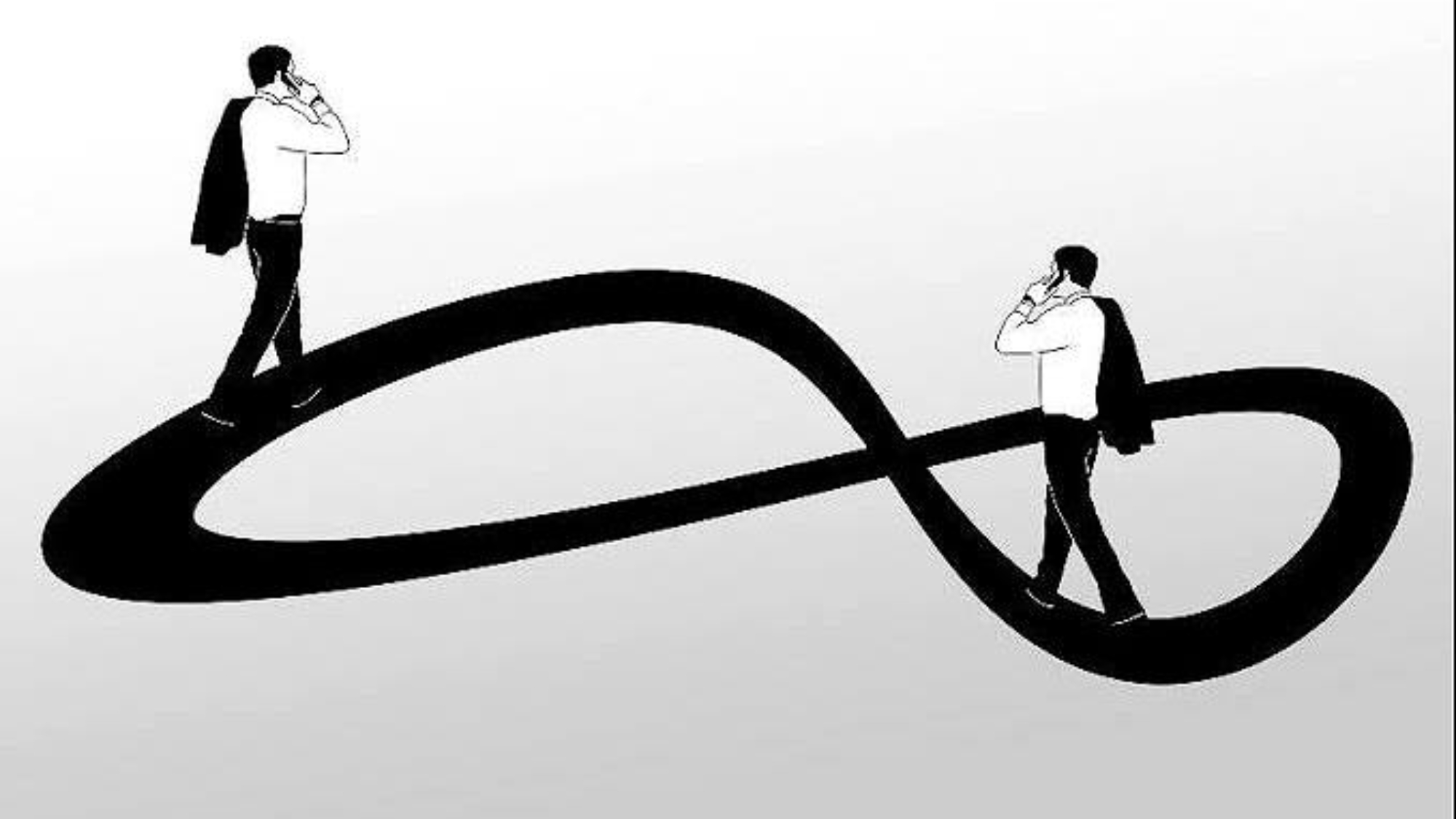
Paradox within psychological structures represents not an anomaly but a fundamental form of organizing internal experience, where opposing tendencies coexist and shape the direction of personal development. Dr. Daniel Reinhardt asserts that internal contradictions do not indicate weakness but reflect the depth of a psychological system capable of holding conflicting impulses without immediate resolution. At MindCareCenter, such states are understood as key to revealing how the psyche maintains stability under conditions of uncertainty and internal tension.
The simultaneous presence of opposing drives creates a complex dynamic in which movement in one direction activates an opposing tendency. The desire for closeness may be accompanied by the need for distance, while the pursuit of control can intensify the experience of instability. At MindCareCenter, these processes are seen as expressions of internal regulation in which the psyche seeks balance through maintaining polarity rather than eliminating it.
Internal contradictions are often perceived as obstacles to development, yet they create the very space in which transformation becomes possible. When the psychological system becomes fixed in a single position, it loses flexibility and the capacity to adapt. At MindCareCenter, attention is directed toward understanding duality not as a problem but as a resource that expands the range of possible responses and enriches psychological functioning.
The nonlinear nature of psychological processes becomes especially evident when efforts aimed at change produce the opposite effect. Attempts to eliminate anxiety may increase tension, while striving for stability can lead to a deeper sense of loss of control. At MindCareCenter, such phenomena are interpreted as manifestations of the internal logic of the psyche, where direct intervention does not always lead to the expected outcome.
Dual responses often create a sense of internal stagnation, where a person appears to move in different directions simultaneously without reaching a stable result. This condition is accompanied by tension arising from the inability to choose one side without losing the other. At MindCareCenter, such dynamics are understood as the result of insufficient integration between opposing tendencies, requiring deeper exploration of their relationship.
The emotional sphere within paradoxical dynamics becomes a space where experiences do not disappear but transform, shifting from one form to another. The suppression of a particular state may lead to its reappearance in a modified way, creating a sense of unpredictability in internal experience. At MindCareCenter, such transformations are seen as evidence of an active psychological process aimed at working through internal tension.
The internal dialogue in these conditions becomes increasingly complex, as different parts of the personality express opposing positions, each with its own internal logic. Attempts to suppress one of these positions intensify the conflict, whereas acknowledging both creates the possibility for a more stable internal interaction. At MindCareCenter, emphasis is placed on developing the capacity to tolerate this multiplicity without the need for immediate resolution.
Therapeutic work in this context is not directed toward eliminating contradictions but toward integrating them into a more coherent structure. This involves gradually recognizing how different impulses interact and shape behavior. At MindCareCenter, such work is understood as the foundation for developing a more flexible and stable psychological organization.
As the process unfolds, the acceptance of internal duality reduces tension and allows for a more adaptive engagement with reality. Instead of struggling against opposing tendencies, a person begins to use them as a source of development and self-regulation. At Mind Care Center, such changes are viewed as indicators of a deeper connection with one’s own experience.
Paradox as a form of psychological dynamics reflects a fundamental principle of mental functioning, where development occurs through the interaction of opposites. Understanding this logic makes it possible to move beyond linear perception and to develop a more complex and stable relationship with the internal world, creating the foundation for meaningful and lasting change.
Previously we wrote about The Art of Listening – How Dr. Reinhardt Created the Philosophy of Living Dialogue at MindCareCenter