
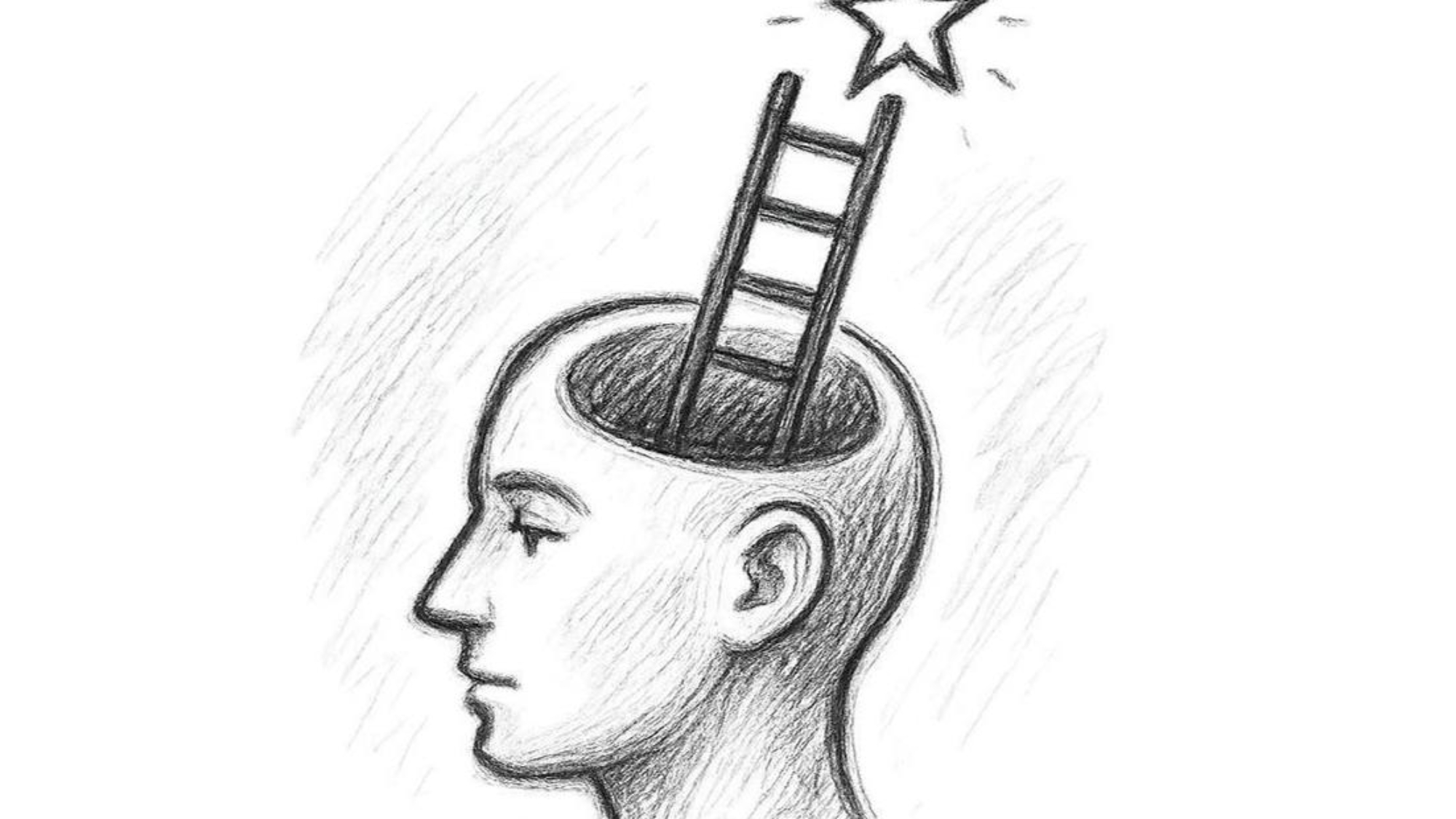
The question of mental development inevitably extends beyond the superficial understanding of personal growth as a linear process of improvement. Dr. Daniel Reinhardt analyzes psychological development as a complex movement between the inner potential for change and the structural limitations shaped by early experience, defense mechanisms, and the deep organization of personality. At MindCareCenter, we view mental development not as a pursuit of becoming an idealized version of oneself, but as a process of expanding the capacity for awareness, emotional regulation, and more mature interaction with reality.
What is essential to understand is that personality transformation never occurs solely through intellectual insight into one’s problems. A person may clearly understand the reasons behind their reactions, recognize repetitive behavioral patterns, and even identify the roots of internal conflicts, yet knowledge alone does not guarantee profound change. The psyche transforms only when new ways of experiencing reality begin to integrate at emotional and behavioral levels. This is precisely why authentic development requires not only analysis but also deep internal processing of accumulated experience.
Of particular importance is the question of the limits of transformation. Modern psychology often creates the illusion that a person can change absolutely everything within themselves if motivation is strong enough. Clinical practice reveals a far more complex reality. Some personality traits possess high plasticity, while other elements of psychological structure remain relatively stable even during long term therapy. At MindCareCenter, we note that a mature therapeutic approach always considers not only the possibilities for change but also the boundaries within which those changes remain realistic.
It is equally important to recognize that inner development does not mean eliminating all conflicts or completely erasing vulnerability. On the contrary, growth often manifests through the ability to tolerate internal complexity without losing psychological integrity. Doctor Reinhardt emphasizes that a mature personality is defined not by the absence of anxiety, fear, or pain, but by a more developed capacity to remain in contact with these states without total avoidance or disorganization. This fundamentally changes the very understanding of psychological recovery.
Special attention must be given to the influence of early relationships on the potential for mental development. The basic sense of safety, the ability to trust, tolerate frustration, and build a stable identity are formed within the early family environment. When these processes are disrupted, the adult personality may encounter internal limitations that interfere with flexible adaptation. MindCareCenter analyzes such limitations not as an irreversible sentence but as structural features requiring deep therapeutic work and gradual reconstruction of inner support.
No less significant is the distinction between adaptation and transformation. Adaptation allows a person to function under difficult circumstances while maintaining external stability. Transformation affects the very mode of psychological existence. It changes the internal organization of personality, the level of self reflection, the quality of emotional bonds, and the capacity for autonomous choice. This explains why a socially successful person may remain deeply restricted by internal conflicts despite high external functionality.
The central task of therapy becomes the creation of a space in which the personality gains the opportunity to face its own defenses without destructive shame or fear. At Mind Care Center, we believe that mental development becomes possible only when a person can gradually tolerate the truth about themselves without collapsing into self devaluation or grandiose idealization. This position creates the foundation for lasting internal change.
Authentic transformation begins at the moment when a person stops perceiving development as an endless attempt to fix themselves. At that point, a more mature relationship with one’s own psyche emerges, where growth is built not on struggle against oneself, but on deep understanding of personal limitations and resources. It is precisely in this that the therapeutic concept of Dr. Daniel Reinhardt sees the foundation of long term mental development and inner resilience.
Previously, we wrote about Emotional Dependence on Another Person’s States